SEO Content: What It Is and How to Create It in 2026
supawriter

SEO content is any page you create to earn visibility in search engines and bring qualified visitors to your site. That can be a blog post, a product page, a template gallery, a free tool, or even a video page, as long as it’s built around a real search need and is easy for Google to understand.
If you’re building organic growth, getting this right is one of the highest-leverage skills you can develop. And if you want a system for producing and maintaining rank-ready articles at scale, Supawriter is built for long-form, SEO-focused publishing with workflows, scheduling, and built-in research.
What is SEO content (simple definition)
SEO content definition
SEO content is content designed to rank in search engines by matching search intent, covering a topic thoroughly, and following SEO best practices like clear structure, helpful on-page elements, and internal links. This lines up with common industry definitions that describe SEO content as content created to attract search engine traffic and content optimized to appear prominently in search results, see WordStream’s guide to SEO content and Semrush’s SEO content overview.
Why SEO content matters
SEO content matters because it compounds.
A strong page can:
- Bring consistent traffic without paying per click
- Introduce your product to people already searching for a solution
- Build topical authority as you publish more related content
- Generate leads over months and years, not just during a campaign
It’s also measurable. You can track impressions, clicks, and ranking changes over time in Google Search Console and connect that to signups or pipeline.
What SEO content is not
SEO content is not:
- Keyword stuffing
- Writing for bots instead of people
- A checklist that guarantees rankings
- Only blog posts
Google’s own guidance frames SEO as helping search engines understand your content and helping users find your site and make a decision, see the Google Search Central SEO starter guide.
How SEO content works (and what it’s not)
Search intent comes first
Every query has an intent behind it. If you match the wrong intent, you can do everything else “right” and still miss.
A quick intent cheat sheet:
| Query pattern | Common intent | Content that usually wins |
|---|---|---|
| “what is…”, “how does… work” | Informational | Guides, definitions, tutorials |
| “best…”, “top…”, “vs” | Commercial investigation | Comparisons, category pages |
| “buy…”, “pricing”, “demo” | Transactional | Product pages, pricing pages |
| brand name + feature | Navigational | Product docs, feature pages |
For “what is SEO content”, the SERP is mostly informational, so a clear definition plus practical steps is the right approach.
How Google evaluates content quality
In practice, pages tend to do well when they:
- Answer the question quickly and clearly
- Provide enough depth to satisfy the query
- Show experience and accuracy with examples, process, and citations when they’re needed
- Stay readable with headings, short paragraphs, and scannable lists
- Get updated when the topic changes
That’s why many top results combine a definition with a process for creating SEO content, plus examples and common mistakes.
The role of keywords and topical coverage
Keywords still matter, but mostly as signals for structure and coverage:
- The primary keyword shapes your title, H1, URL, and main angle
- Secondary keywords help you cover subtopics people expect to see
- Related queries help you add sections that reduce “pogo-sticking” back to Google
Keywords should guide what you cover and how you label it, without forcing awkward writing.
Types of SEO content (with examples)
Blog posts and guides
These are classic informational assets.
Use them when:
- You want to capture “how to” and “what is” queries
- You need to educate before someone is ready to buy
- You’re building topical authority in a category
Examples:
- “What is SEO content” (this page)
- “On-page SEO checklist”
- “How to do keyword research for B2B SaaS”
Landing pages and product pages
These target higher-intent searches and convert the traffic you’ve earned.
Use them when:
- The searcher is evaluating solutions
- You have a specific feature or use case to map to a query
Examples:
- “AI writing tool for SaaS teams” (category intent)
- “SEO content generator” (solution intent)
- “Programmatic SEO platform” (feature intent)
Visual and interactive content
These assets can attract links and help your page stand out.
Use them when:
- A concept is easier to understand visually
- You want something other sites will reference
- The SERP shows videos, tools, templates, or visuals
Examples:
- An SEO content brief template
- A topical coverage checklist
- A free SERP outline generator
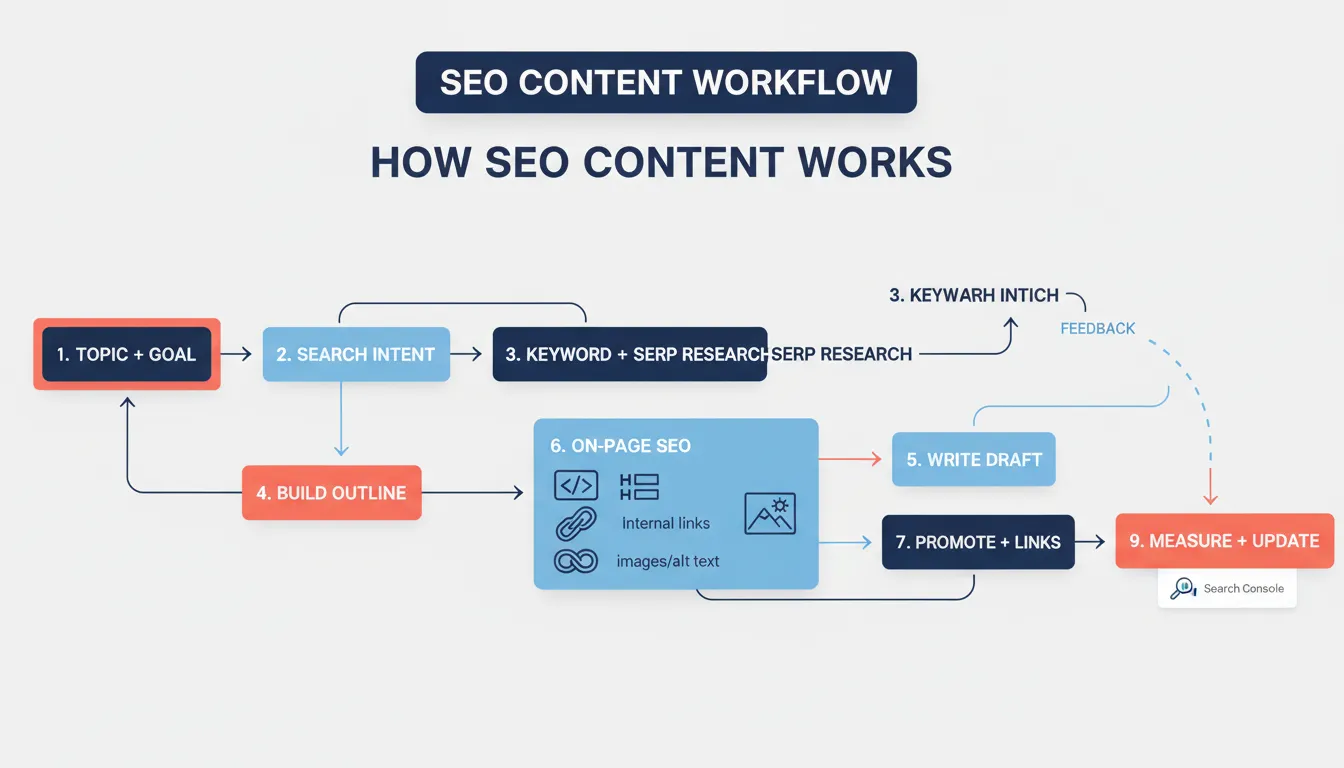
How to create SEO content step by step
Pick a topic and keyword based on demand
Start with one of these sources:
- Your customers’ questions (sales calls, support tickets)
- Competitors’ top pages (to find content gaps)
- Keyword tools (to validate demand)
- Search Console (to expand what already works)
Pick a primary keyword that is:
- Specific enough to match a single intent
- Relevant to what you sell
- Realistic for your site’s authority level
If you’re building a repeatable system, you’ll also want to group keywords into topic clusters. (This is where a documented process helps, see how to build a content strategy step by step.)
Build a SERP-based outline and write for humans
Before you draft, scan the first page of Google and answer:
- What sections show up in the top 5 to 10 results?
- What examples do they include?
- What’s missing or outdated?
Then write:
- A direct definition near the top
- Sections that match expectations (types, steps, examples)
- Clear takeaways and next actions
Achieving consistent output gets a lot easier with Supawriter because it’s built to generate long-form drafts that match your brand voice and cover SEO basics like structure, meta fields, and internal linking, without rebuilding your workflow for every post.
Optimize on-page elements and internal links
On-page optimization is where you make your content easy to understand for both readers and search engines:
- Use one clear H1 and descriptive H2s
- Add the primary keyword naturally in the title and early body copy
- Write a compelling meta description (for clicks)
- Use descriptive image alt text
- Link to related pages on your site
Internal links are especially underrated. They help:
- Users discover the next most helpful page
- Search engines understand your site structure
- Important pages gain more internal authority
If you want a practical checklist you can reuse, follow this on-page SEO checklist for 2026.
Publish, measure, and refresh
SEO content isn’t “publish and forget.” You’ll usually get better results by refreshing:
- Outdated screenshots or steps
- Sections that no longer match intent
- Examples that feel generic
- Titles and meta descriptions to improve CTR
Measure:
- Impressions (topic demand and visibility)
- Clicks and CTR (snippet quality)
- Average position (ranking trend)
- Conversions (did the page help the business?)
Supawriter helps teams run this loop with scheduling, workflows, and a CMS-style process for publishing and updating content, which matters once you’re managing dozens or hundreds of SEO pages.
SEO content vs. content marketing vs. copywriting
The differences in goals and metrics
These terms overlap, but they’re not the same.
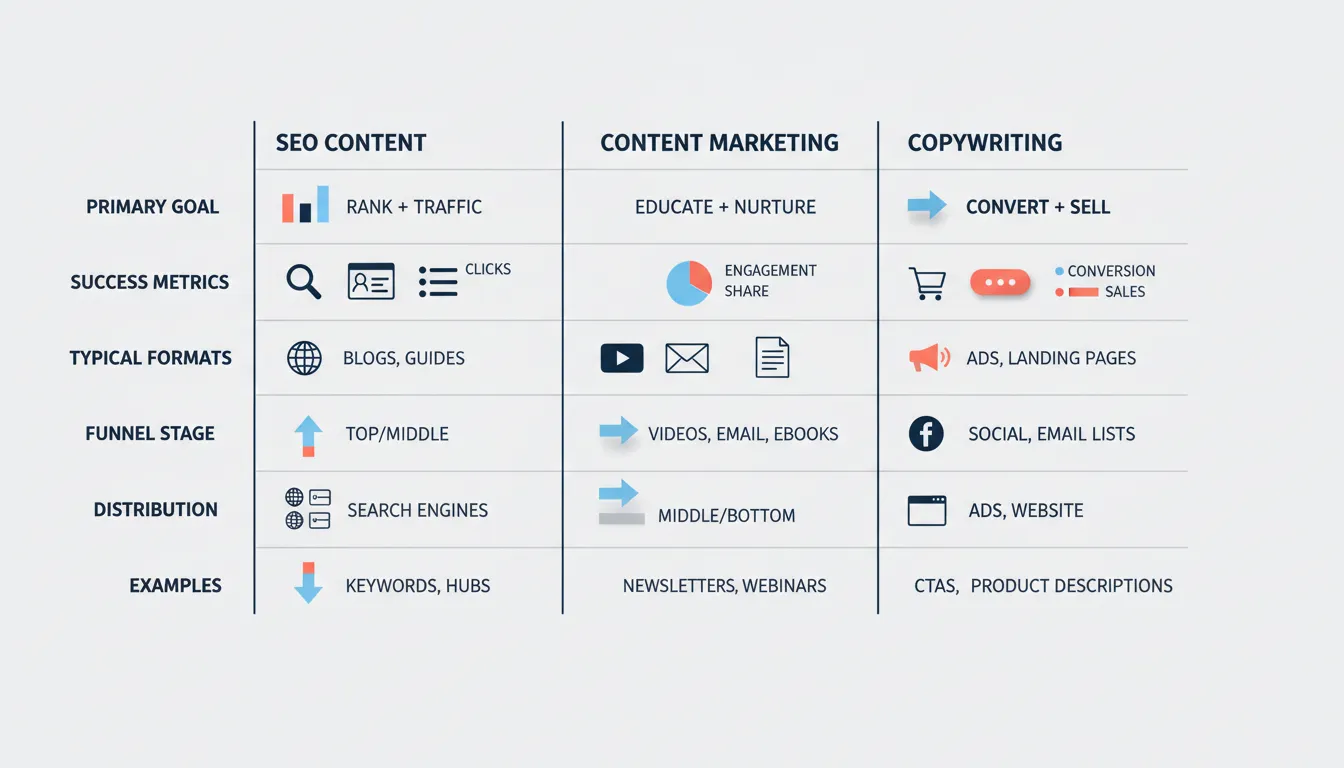
Here’s the plain-English breakdown:
| Discipline | Primary goal | Common success metrics | Typical formats |
|---|---|---|---|
| SEO content | Earn organic visibility | Rankings, clicks, organic leads | Guides, product pages, templates |
| Content marketing | Build trust and demand | Engagement, subscribers, influenced pipeline | Newsletters, thought leadership, webinars |
| Copywriting | Convert attention into action | Conversion rate, revenue, demos booked | Landing pages, ads, emails |
How they work together in one funnel
In a healthy funnel, these support each other:
- SEO content captures demand that already exists
- Content marketing builds demand and brand preference
- Copywriting converts that demand into signups, demos, and revenue
The mistake is treating them as competing priorities. Strong programs use all three, in sequence.
A quick decision guide
If you’re choosing what to write next:
- If people are already searching for it, create SEO content.
- If you need to shape the conversation or educate the market, create content marketing.
- If traffic exists but conversions lag, improve copywriting on key pages.
Once you’ve got those basics down, the advantage is execution: publishing consistently, keeping quality high, and updating what matters. That’s where Supawriter fits, helping you turn SEO content from a one-off project into a repeatable process you can run every week.
Grow your traffic on autopilot now
Join thousands of users already using our platform.